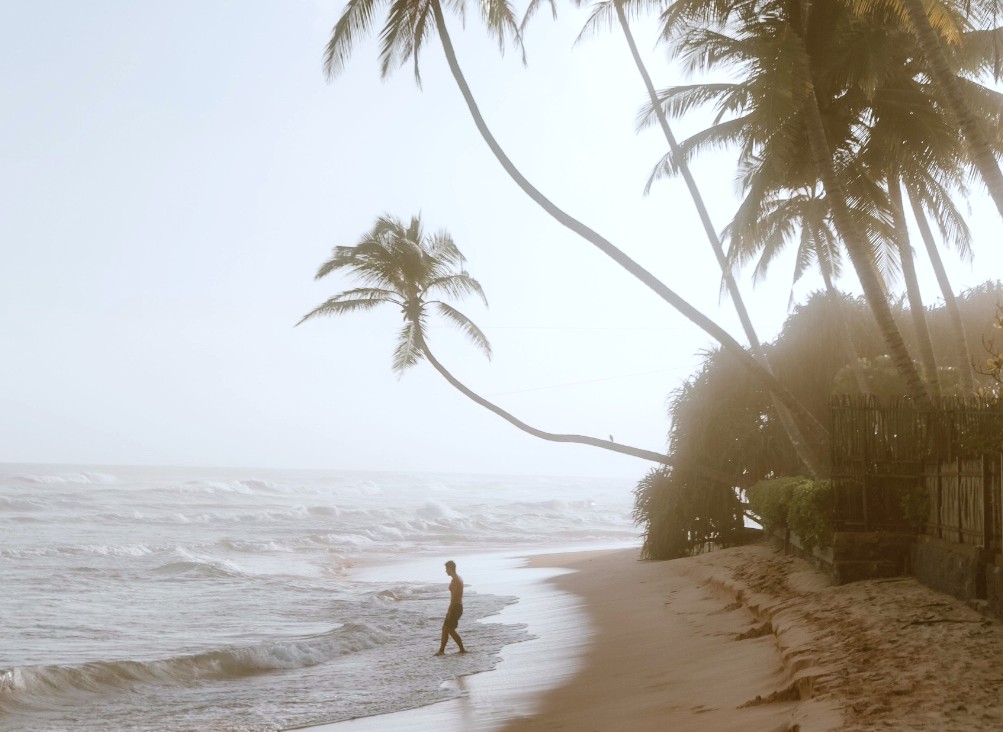
May to November on Sri Lanka's south coast is the greener, quieter half of the year. Rain comes in bursts rather than all day, surf still works at most breaks, restaurants and cafes stay open, and accommodation prices drop. It is not monsoon in the sense of weeks of grey skies, it is just the season when mornings might be dry and afternoons might not be.
Most people picture Sri Lanka's south coast as December to April: steady sun, calm seas, peak-season crowds. That is real, but it is not the whole year. The other half, May through November, has trade-offs that work well for some travelers and less well for others. Here is what actually happens, and what stays the same.
When it rains and what that means
Rain in Ahangama from May to November typically comes as short, heavy downpours in the afternoon or evening, not continuous drizzle. A morning might be clear and warm, the afternoon might bring an hour or two of hard rain, and by evening it clears again. Some days are fully dry. Some weeks see rain every afternoon. It varies, and there is no reliable pattern within the season itself.
What this means in practice: you can usually get your morning surf or beach time in before the weather changes. Scooter rides in the rain are unpleasant but manageable with a poncho. Tuk-tuks keep running. The bigger shift is psychological, you need to be flexible with timing and comfortable with the idea that plans might move around a bit depending on the sky.
The surf still works
Ahangama's main surf breaks, Kabalana and the smaller spots near Marshmallow Beach, work year-round. May to November brings bigger swells and more power, which suits intermediate and experienced surfers well. Beginners might find the waves more challenging during this period, but calmer days still happen, and surf schools stay open and adjust their teaching spots accordingly.
The water stays warm. Crowds thin out significantly compared to the December to April peak. If you are comfortable in chest-high to head-high waves and do not mind checking the forecast daily, this season can actually be better for surfing than the main season.
What stays open and what closes
Most restaurants, cafes, and surf shops in Ahangama stay open from May to November. A few places close for a month or two, usually the smaller beach shacks or spots with European owners who head home for the northern summer, but the core of the town keeps running. Grocery stores, tuk-tuk drivers, mechanics, and other daily-life infrastructure never close.
Accommodation options thin slightly as some guesthouses and villas take the season off, but plenty stay open and drop their rates to reflect the quieter period. Domi Casa and Domi Safiya are open year-round (that is us, and we wrote this), along with most other established places. Yoga studios, massage spots, and tour operators keep regular hours.
The upside of fewer people
Ahangama from May to November feels like a different place. Beaches are emptier. Restaurants have tables without a wait. Surf breaks are less crowded. The energy shifts from peak-season bustle to something slower and more local. If you value space and quiet over guaranteed sunshine, this is the season that delivers it.
Prices drop across the board. Accommodation, long-term scooter rentals, and even some restaurant menus reflect the lower demand. For digital nomads or anyone planning a longer stay, May to November offers significantly better value while still giving access to everything that makes Ahangama worth visiting in the first place.
How green it gets
The landscape changes noticeably. Rice paddies turn vivid green. The hills behind Ahangama, which look dry and brown in March, become lush and dense. Gardens and roadside vegetation explode with growth. The whole island feels more alive, which is either a visual bonus or a reminder that things get muddy and humid, depending on your perspective.
Humidity rises. Mornings can feel sticky, and clothes take longer to dry. If you are sensitive to heat and moisture, this is the season's real challenge, not the rain itself. Air conditioning and fans become more essential than they are in the dry months.
Who this season suits
May to November works well for surfers chasing bigger swells, digital nomads on a budget who can work around occasional afternoon rain, and travelers who prefer quiet over crowds. It works less well for families with young children who need predictable beach days, or anyone planning a trip around outdoor activities that cannot be rescheduled when the weather changes.
If your ideal Sri Lanka trip is reading on the beach every afternoon and swimming in flat, calm water, wait for December. If your ideal trip is surfing uncrowded breaks, eating well, exploring inland on dry mornings, and paying half the accommodation cost, this is your season.