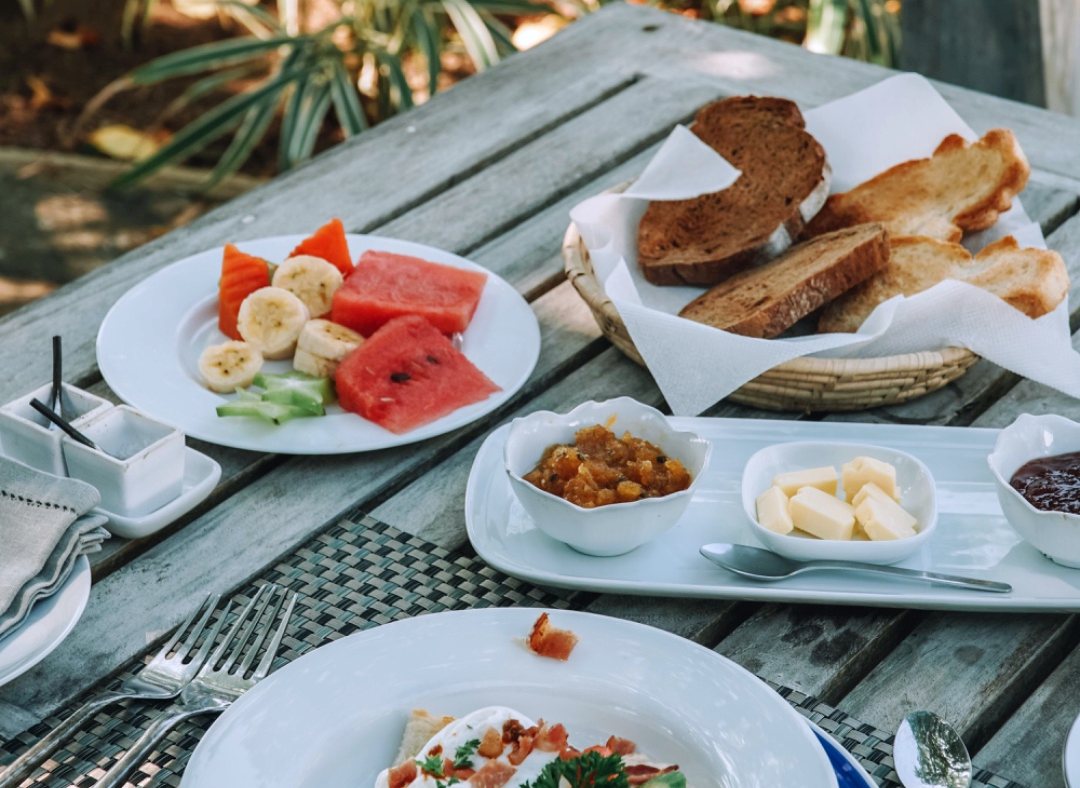
Breakfast in Ahangama happens in one strip along the main road, mostly between Kabalana and Marshmallow Beach. The cafés open around 7:30 or 8 AM, the surfers arrive straight from dawn patrol, and by 9 AM nearly every table has someone in board shorts ordering egg hoppers or an açaí bowl. You walk there from most guesthouses in under ten minutes, order what you want, and sit outside while the village wakes up around you.
This is not a resort breakfast buffet. It is a handful of small cafés and one or two local kitchens, run by people who live here and serve what actually works in the morning heat. Some mornings you want rice and curry at 8 AM, other mornings it is a flat white and avocado toast. Ahangama does both, and the line between the two is thinner than you think.
The hoppers question
Egg hoppers are the breakfast most visitors remember. A bowl-shaped rice flour pancake, crispy at the edges, soft in the centre, with an egg cracked into it and cooked on a small clay stove. You eat it with pol sambol, the coconut and chilli relish that is sharper and more alive than any hot sauce you brought from home. String hoppers are another option, steamed rice noodles pressed into flat circles, served with dhal curry and sometimes a potato curry on the side. Both are filling, both are cheap, and both are what Sri Lankans actually eat for breakfast.
The places that do hoppers well open early and run out by mid-morning. A few cafés along the strip offer them, but for the real thing you walk a little further inland to one of the local kitchens near the village. The hopper itself costs about the same as a bottle of water back home, and you will eat two without thinking about it.
The café strip
The main café stretch runs for about a kilometre, easy to walk, and most places sit right on the road with open fronts and wooden tables facing the street. This is where the smoothie bowls, avocado toast, and proper coffee live. The açaí bowls are thick, properly blended, and topped with fresh fruit, granola, and sometimes coconut flakes. The flat whites and cappuccinos come from actual espresso machines, not instant sachets, and taste like someone trained on them.
A few names come up in every conversation. Refresh is small, runs out of pastries by 10 AM, and has strong coffee. Hangtime gets the surfers early, big portions, fast service, and outdoor seating that fills up quickly. Folsom Prison Blues is further east, quieter, good for sitting with a book after the morning session. Each place has its rhythm, and after a few days you will settle into one or two depending on whether you want conversation or quiet.
Walking from Domi Casa, which is us, you are about 450 metres from Marshmallow Beach and five minutes from the start of the café strip. Most mornings you will walk, though a scooter gets you there in under two minutes if you are carrying boards or avoiding the heat.
Rice and curry at 8 AM
Some mornings, toast does not land. You want rice, dhal, pol sambol, maybe a fried fish or a potato curry, all laid out on a plate at 8 AM while the rest of the village is still ordering porridge. A proper Sri Lankan breakfast is rice and curry, the same meal served at lunch and dinner, and the local spots near the market or on the inland roads do it without ceremony or English menus.
You point at what you want, they serve it on a steel plate or a banana leaf, and you eat with your right hand or a spoon depending on how confident you are feeling. It costs less than the smoothie bowl, it fills you until mid-afternoon, and it is what half the people in Ahangama are eating while you order your third flat white of the week.
What it costs and how it works
A local breakfast, hoppers or rice and curry, runs cheaper than a café meal but not by much once you add a fresh juice or a king coconut. A smoothie bowl or avocado toast at the cafés costs about what you would pay in Bali or Canggu, maybe slightly less. Coffee is good and priced fairly. Most places take cash, some take card, and a few now accept mobile payments through local apps.
You do not need a reservation. You walk in, sit down, and order. Service is relaxed, which means your food arrives when it arrives, and nobody is rushing you out the door. If you are staying longer than a few days, the same faces start to recognise you, and the third or fourth visit often comes with an extra sambol or a recommendation for what is good that morning.
The timing
Breakfast in Ahangama has two peaks. The surfers come in around 8 AM after the early session, and by 9 or 9:30 AM the tables start to turn over. If you want a quieter table and faster service, go before 8:30 AM or after 10 AM. The local kitchens serving hoppers often close by 11 AM or run out of batter, so if that is what you are after, go early or accept that you missed it.
Most cafés stay open through lunch, so if you sleep in or get caught up with something, you can still get breakfast food until early afternoon. The line between breakfast and lunch blurs here anyway. Nobody is judging you for ordering egg hoppers at 2 PM.